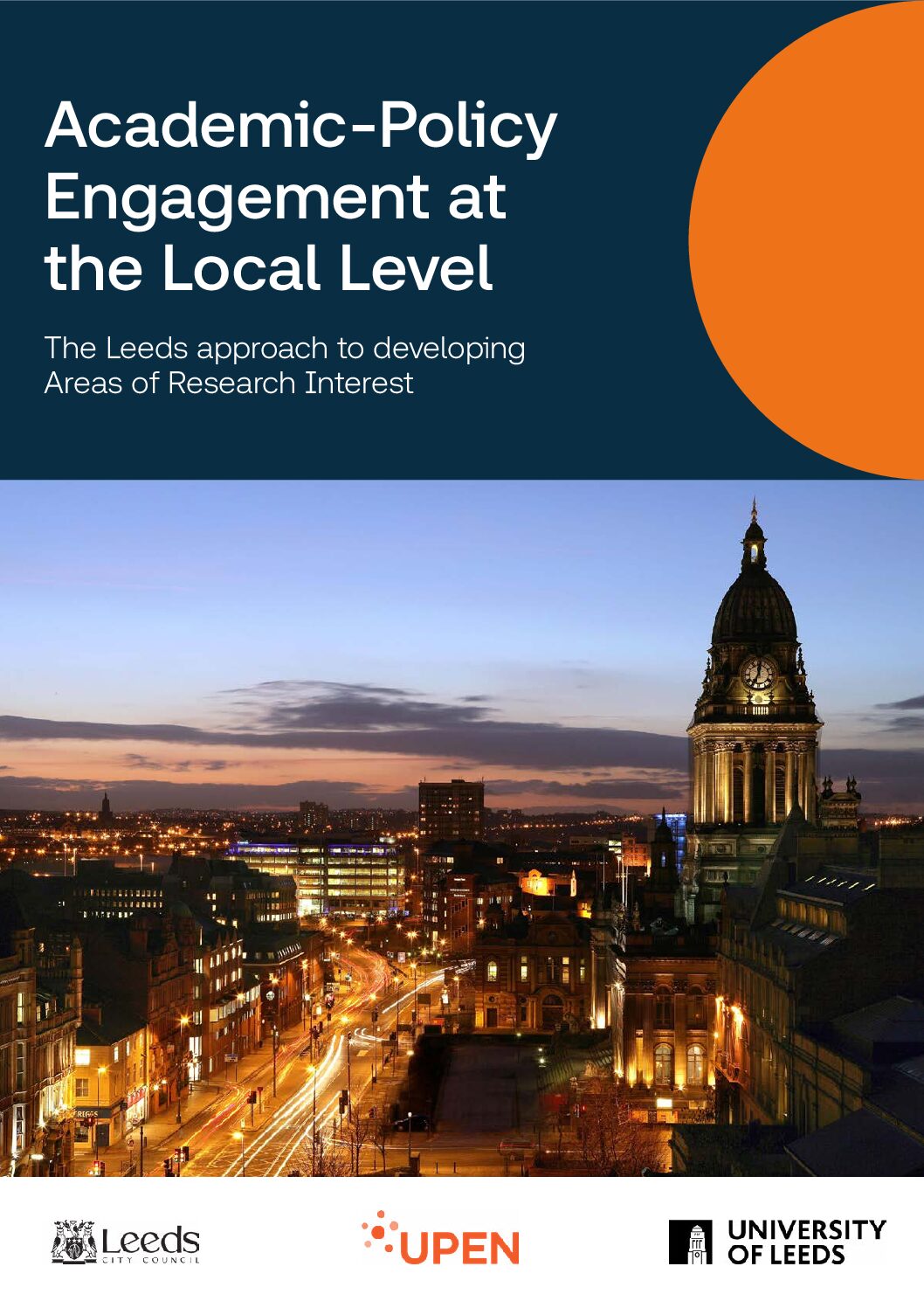
Areas of Research Interest (published documents of research and evidence needs by public policy organisations) can function as a “multi-tool”. They serve different purposes for different organisations, adapting to local contexts to facilitate relationships between knowledge producers and consumers, provoke strategic conversations, and address knowledge gaps. But to be an effective and sustainable regional policy-engagement mechanism, we must acknowledge and address current challenges as well as embrace opportunities.
This report is based on the rich input and insights from over fifty practitioners who attended a learning workshop on Regional Areas of Research Interest, which was hosted by UPEN and Northumbria University’s Public Policy and Management Research Group in York in 2025.
The authors explore how the purpose and delivery of Areas of Research Interest have evolved, highlight the current lack of systematic evaluation, share insights into models of inclusion, and identify risks of duplication and overload alongside other barriers to progress.
The report identifies six priority actions to ensure that the evolving Areas of Research Interest landscape supports and enables meaningful knowledge exchange and decision making
- ARI-aligned funding models: Developing “rapid” funding that matches policy timescales and enables non-academic institutions to lead grant applications
- Evaluation frameworks: Creating clear definitions of impact that capture both process changes and substantive outcomes
- Peer support network: Establishing ongoing convening opportunities for knowledge exchange, problem solving, and reducing duplication
- Collective Theory of Change: Developing shared understanding of the purposes of and pathways to impact for ARIs
- Integrative approaches to ARI: Testing community-engaged and collective models across multiple locations
- Integration tools: Expanding databases, creating collaboration frameworks, and enabling thematic clustering
Download the report here.
See the UPEN Areas of Research Interest programme page for related resources and ongoing activity.
Related resources
Report: How and where is policy engagement recognised and rewarded in Higher Education?

Building capacity, delivering impact: The use of the Policy Support Fund in universities

Lessons from Leeds: New case study explores the piloting of Areas of Research Interest (ARI) in local government