Our insights and activities 2026
This has been a year of exploration, learning and reflection for UPEN. We are continuing to strengthen capacities and capabilities for academic-policy engagement across the UK and develop UPEN as an organisation which offers an effective national brokerage infrastructure.
Download the full reportWhat we’ve learned so far
Through our Programmes activities, we have been developing new insights into how to build knowledge mobilisation competencies and skills needs across UPEN members; enhancing our understanding of institutional capacity; supporting regional academic-policy engagement; advancing practice in engagement and knowledge mobilisation; developing UPEN’s brokerage functions and capacity; and working hard to improve how we engage with and support our members.
- That we need more capacity
- That these things take time
- That there is a thirst for sharing and improving knowledge, and a commitment to shared learning
- That clear mechanisms for academic policy engagement are valuable, and valued
- That this is complicated!
UPEN plays a key role within an increasingly challenging university landscape by providing a streamlined route to academic expertise, responding to increasing policy appetite for evidence, convening universities and wider stakeholders to address knotty problems and providing collective mechanisms for academic-policy engagement and impact that deliver mutual benefits and better outcomes.
Contributing evidence and expertise to address societal challenges remains a crucial endeavour.
Partnering with policy actors and wider stakeholders to turn evidence into action is often overlooked in core university missions, and seen as a ‘nice to have’ activity, meaning that academic-policy engagement often feels precarious.
Key Achievements

Nearly 130 UPEN member institutions
UPEN’s membership has continued to grow steadily, reaching nearly 130 institutions in total, with 15 new members joining since 2025. The network’s reach across the English higher education sector is particularly strong, underlining its position as the primary network for academic-policy engagement

Six Communities of Practice Launched
UPEN Communities of Practice (CoPs) are a collaborative space for sharing best practice, running dedicated events, and producing reports and activity that contribute to key areas of interest in the academic-policy engagement ecosystem. Six CoPs have been launched: ARI Practitioners; Knowledge Mobilisation; Arts and Humanities; Place; International, and; Research Communications in Curriculums.

Advancing Academic-Policy Engagement
UPEN published a major report on regional ARIs, launched a central ARI Hub to improve visibility of ARIs published by combined and local authorities, and established an ARI Practitioners Community of Practice, with 300 registered members, which has established six priority areas for focus and delivery.
We are embarked on a complex journey, and it isn’t always easy. But it is one in which, by working together, we can get so much further.
We are extremely grateful to all those individuals and organisations who have contributed their time, energy and insight to UPEN’s work.
Since 2025, we have welcomed 15 new members to the Network.
Our network makes up over 80% of all Universities in the UK.
Member Engagement and Network Development
Relaunching our Communities of Practice
Following a period of consultation with members, and as ratified by the newly formed Executive Board in April 2026, UPEN has refreshed its structures. We have reconstituted our former sub-committees into Communities of Practice (CoPs), collaborative spaces for sharing best practice, running dedicated events, and producing reports and activity that contribute to key areas of interest in the academic-policy engagement ecosystem. They are chaired by UPEN members and made up of knowledge brokers, academics, policymakers and external partners.
Launching our Member Consultation
UPEN’s sector-wide member consultation has drawn a substantial response from across the network. The Member Consultation will be run biennially, to track engagement, develop a deep understanding of the landscape, enhance and develop our member offer, and ensure our services and direction are informed by the members. We are committing to a model in which our services, activities, and priorities are informed by our members. This consultation allows us to track who is doing this work, where the pressures and opportunities lie, and how the field is developing in ever-changing contexts.
Building a renewed membership offer
UPEN is committed to maintaining an inclusive membership model which is accessible to all. At the same time, we need to take steps to secure the long-term sustainability of our network. We are working with members to understand what is possible and feasible and map a clear offer. We are engaging the network to understand what is realistic and feasible from a range of perspectives. The aim is to map a clear and transparent offer, one in which members understand what they receive, what is asked of them, and how the model sustains the network they rely on.
Moving from curation to creation
The strategic focus of UPEN’s communications activity is shifting from the curation of sector news towards the creation of original, evidence-led content
Communications and Impact
We are establishing UPEN as a coordinated interface between academia and policy; deepening member engagement; driving participation and learning through Programmes, and building a salient, trusted brand.
subscribers to our newsletter, marking a 40% increase in 12 months.
followers on LinkedIn, with 72% growth in 12 months.
active users of the website
Building a sustainable, robust UPEN
We are developing and reforming our governance structures to support UPEN’s expansion and move towards being a member informed organisation.
Governance and Sustainability
Our Advisory Board
UPEN’s Advisory Board is there to provide advice on the progress and delivery of UPEN Programmes as well as providing critical support with UPEN’s goal of becoming a sustainable connective infrastructure between academia and public policy. The Advisory Board is chaired by Professor Graeme Reid (UCL) and membership comprises senior leaders from central government, devolved legislatures, local government, funding bodies and higher education.
Our Executive Board
UPEN has recently launched its Executive Board, which will support and advise on strategic direction and internal policies, working with UPEN leadership to build a long-term organisational model and to critically engage with and offer advice on activities and programmes of work. Its role is to help steer the development of UPEN into a sustainable organisation, including considering optimal financial and operating models.
Our business plan
We are developing a business plan to underpin the wider financial sustainability of the organisation. This plan will set out a realistic picture of UPEN’s costs and the resources required to deliver our activities, alongside a diversified approach to income that does not rest on any single source. By taking a structured, forward-looking view of our finances, we aim to put the network on a stable and resilient footing, one that safeguards the services members value today while creating the capacity to invest in and grow our offer over the years ahead.
Key work programmes
Building capacity for academic-policy engagement
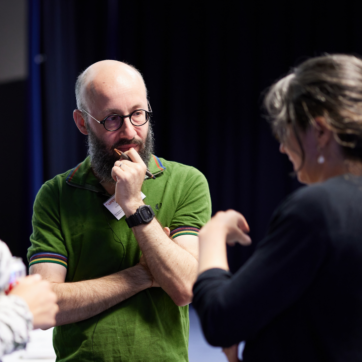
Our literature review identified five interconnected dimensions of institutional capacity: intermediary roles, leadership and strategic recognition, time and flexible funding, skills and learning, and incentives and career pathways. We are also strengthening regional engagement, working with networks across the country and developing a forthcoming place-based toolkit. In addition to this, we are enhancing national brokerage through UPEN Connect, linking policy professionals with academic expertise via rapid-response tools, evidence snapshots, and events, and responding to high demand on themes such as AI.
Advancing knowledge mobilisation
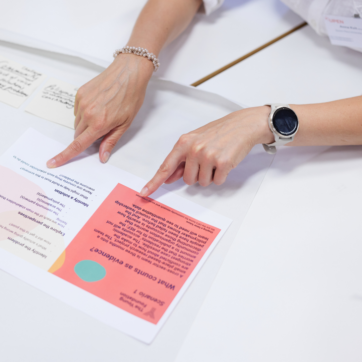
UPEN’s knowledge mobilisation work has included an intensive evidence-gathering phase, including a member survey, CPD provider interviews, and a ‘what works’ review. This confirmed the need to support knowledge mobilisation skills across diverse roles and career stages. The resulting approach is diversity-aware, equity-focused, and geared towards sustained behavioural change rather than one-off training, with a light-touch competency framework to be tested in 2026. Our Community of Practice on Knowledge Mobilisation, launched in September 2025 with over 300 members, has co-created a six-priority agenda delivered through two projects on ‘what works’ and impact.
Advancing academic-policy engagement in the UK
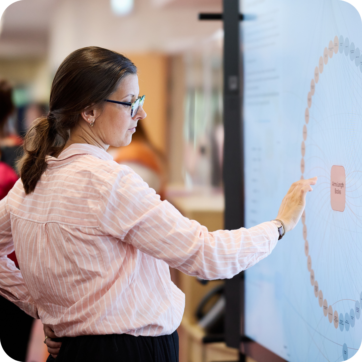
Our recent ARI workshop and accompanying report shaped support for organisations including the Welsh Government and West Midlands Combined Authority, alongside pilot projects, a central ARIs Hub, and the new ARI Practitioners Community of Practice. The Place Community of Practice and two 2026 regional demonstrators, in Nottingham and the Tees Valley, will test place-based models. Work on community participation, led by the Young Foundation, is developing pilots with national and local partners to embed community evidence in policymaking.


Related resources
A review of place-based academic-policy engagement in the UK

Leeds City Council Areas of Research Interest Evaluation

